

Old Doors
Our time on Earth is just a layer

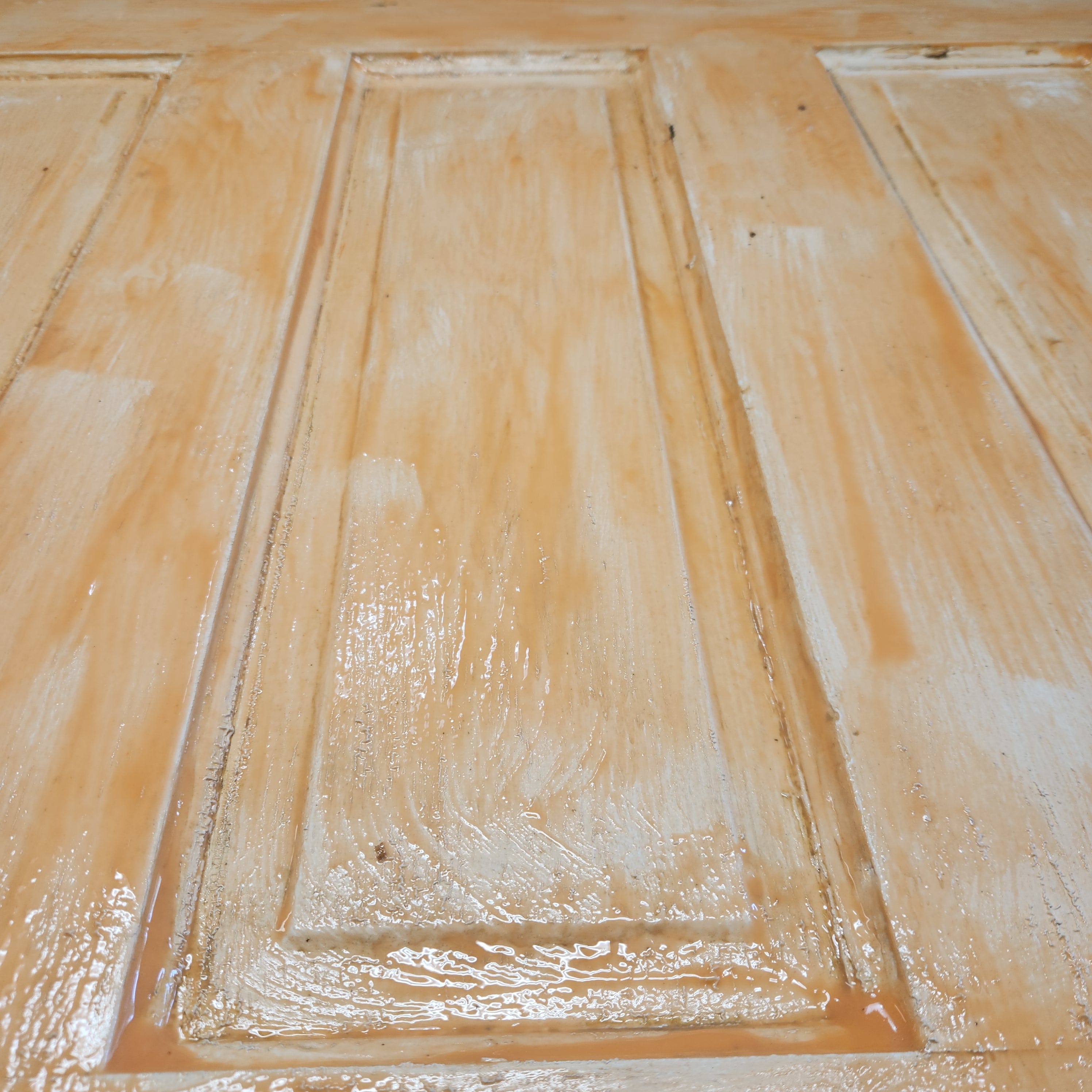
When we originally began working on our circa 1900 house there was no Instagram. Really, there wasn’t even much of an internet. The house was an absolute wreck in a dangerous neighborhood and I was probably one of a handful of people willing to take it on. A house flipper who landed on hard times had stripped it of everything down to the plaster - picture the inside of a big sailing ship where you can see the framing and structure - that was my house. But all the stuff that had been stripped was in piles in each room, in the backyard, in the front yard - some of the trim was even on my neighbor’s roof where it had landed as the flipper’s demo crew threw it out of the windows.
We had a huge jigsaw puzzle on our hands without even a picture on the box as a guide. We were ridiculously rich in one thing and one thing only and it wasn’t money.
It was doors.
There were 22 six-panel original doors haphazardly stacked up in various places. Most of them were still straight and true, even if they did have curtain rods hung on them or chunks missing and they were all thick with coats of paint. They were of various dimensions. Since the house was a husk with no interior walls (yes, this was a structural problem) we really had no idea which door went with which room. Since there weren’t any internal stairs (the house had been broken into apartments) we couldn’t even check the second floor.
Spend five minutes on Facebook after you’ve shopped for door hardware and you’ll get served hundreds of videos of people stripping furniture and building things, but when we were confronted with 22 doors coated with old paint there was no influencer to tell us what to do. We had to figure it out.
The solution we settled on was two sawhorses in our front yard, a heat gun (that sometimes threw out flames) and a five-in-one tool that was wicked sharp. And we stood in the hot sun taking those doors down to bare wood for MONTHS. It was arduous, slightly dangerous, and incredibly messy. In the end, we didn’t need all of the doors because we couldn’t match them with openings - so I stashed a few away, unstripped and forlorn.
And then decades passed. And suddenly it was finally time for a big kitchen remodel and I needed a door. Door stash (really, maybe even better than DoorDash) to the rescue.
I’m way older than I was the last time I did this - and the world feels far less hopeful and America feels a good bit more dangerous. Stripping a door is an opportunity to ruminate, tho, and as I worked to get the door to release its layers, I realized what a gift it is to live in an old house and touch old things.
The door was made in 1900 - the same year William McKinley beat William Jennings Bryan. It was a very contentious time in American history with tumult with Taiwan and China, fights over tariffs and a foreign policy stance that was divisive (does this sound familiar?). Perhaps, like today, the man who made my door stood over his work mumbling about damn politics.
“In 1896, voters worried about other issues. Those included tariffs, or taxes on imported goods, as well as debate over the gold standard. This was an election concerned with the economy. Bryan and McKinley were at war over American progress—in the United States.” (Source)
My door would have been made in Atlanta - probably at a local mill. And that mill likely “employed” the labor of African Americans. 1900 was a time of racial polarization in the deeply segregated south. The rights we all think of belonging to American citizens still only belonged to white men in 1900. Too many Americans think slavery ended with the Emancipation Proclamation, but the reality is that in the south labor became yet another way to force work out of people without recompense or choice. Convict labor was common in lumber mills in Georgia. It’s entirely possible my door was made by a convict.
This is what I was thinking about as I applied the chemical stripper and waited for it to work - how we tend to think we’re living in the darkest time in America, but are we? The long view of American history reveals plenty of troubling times where rights felt exclusionary and the decisions of politicians highly suspect. I picture the carpenter muttering over the door as he’s hanging it somewhere in my house.
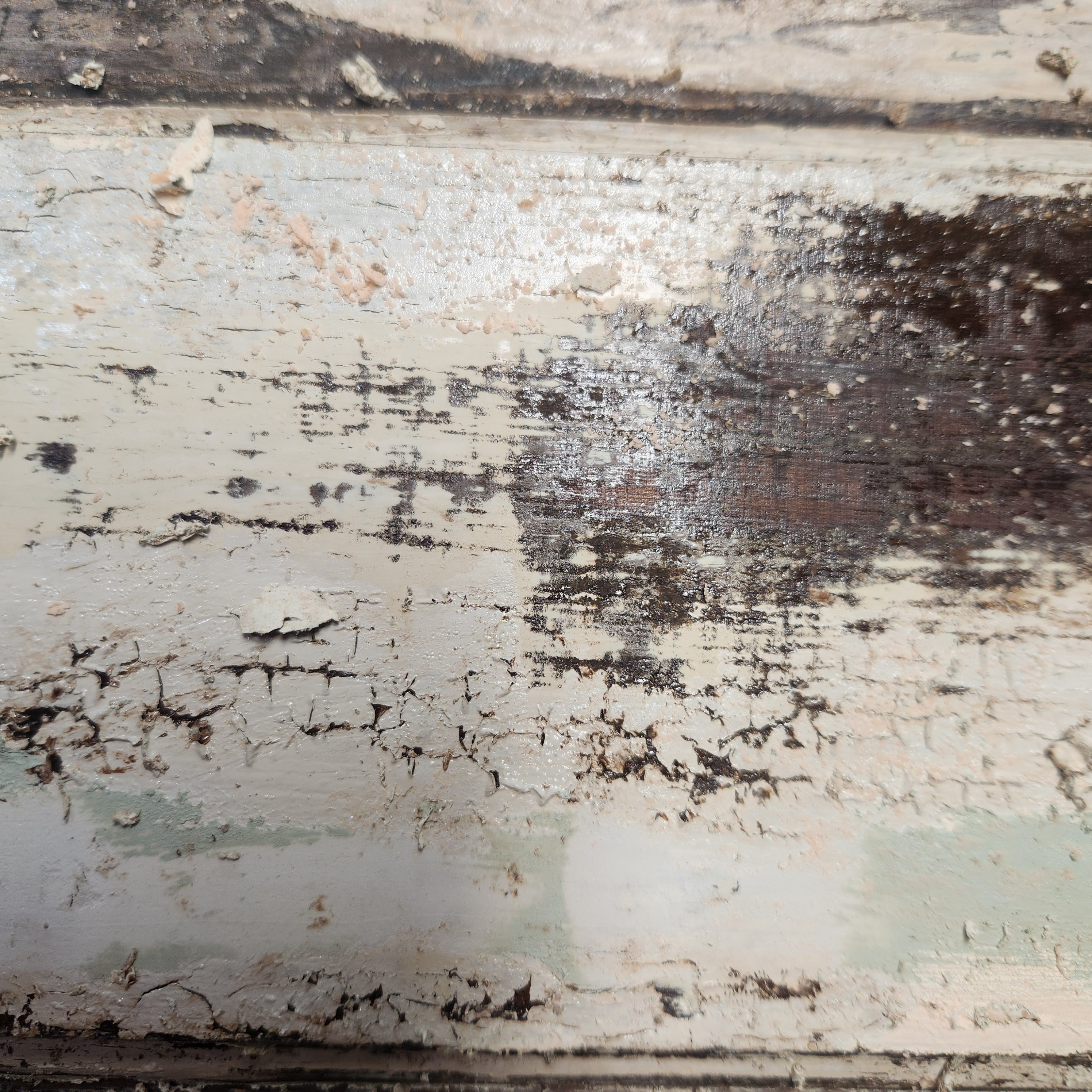
A door that is 125 years old does not strip in one go. The layers come off in stages. After my first pass, I could see some familiar colors from my months over the sawhorses as a younger woman. A terrible pink from the 1950s. The robin’s egg blue that is almost gray is surely from the 1940s (probably Copen Blue). But underneath the blue is a color from the 1920s - a sort of buttercream yellow. Each layer reminds me that someone long dead decided to paint a door at some point. Maybe they wanted things cheerier. Maybe a baby was coming. Maybe they felt hopeful in the early 1920s about progress and women’s suffrage. Maybe they used blue in the 1940s because it felt soft and homey after so much tumult in WW2.
The last layer is the original stain and the varnish makes a sticky mess. This much is muscle memory for me.
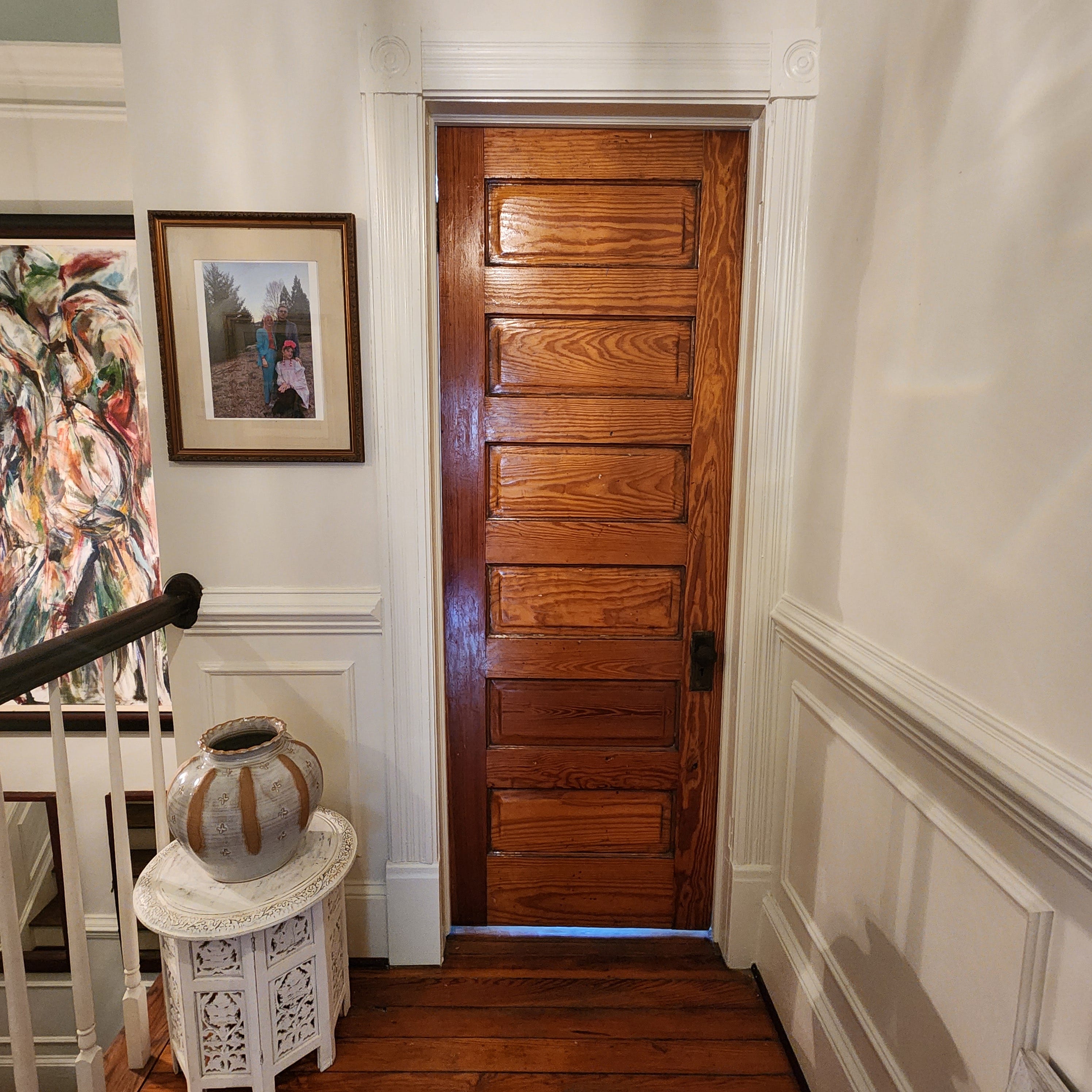
And then once the old varnish and all the layers of paint are gone? I can see the heart pine wood that is so very beautiful. Heart pine is not available anymore. My door was milled from old growth trees that could reach 150 to 175 feet and took 200 years to mature. My entire house is framed in heart pine lumber. My door very likely came from a tree that grew where the Cherokee Indians made their homes and took their treks before colonization swept them onto the Trail of Tears.
So, yes. This is a dark time for America and it feels chaotic and dangerous. But standing over my door I realized that we are just a layer in the history of America. Will it come right? Will we once again feel like good people are doing good things despite some of the sins of our collective past?
I hope so.
Gorgeous. As an American Studies major married to an architect living in a house from the 30s, I feel you. Insisting on hope but putting in the work!